
The Electrician Program at Carolina Trade Academy combines modern virtual training with flexible online learning to help you build practical electrical skills. Designed for real-world application, this program prepares students to pursue entry-level opportunities and industry-recognized credentials in a growing field.

24/7 Course Access
All course content is available around the clock, allowing you to study when it fits your schedule.
Total Training Time
The program includes approximately 65 hours of instruction.
Completion Options
Progress through the course at a pace that works for you:
This program prepares students to sit for the OSHA 10-Hour Construction Industry certification exam upon completion.
Flexible Progression
Advance through the coursework on your own timeline, with full control over your study schedule.
Applied Learning Approach
Strengthen skills through demonstrations, simulations, and interactive exercises designed to mirror real job tasks.
Progress Checks
Quizzes and assessments help reinforce learning and measure understanding throughout the program.
Practical Skill Emphasis
Hands-on drills, guided activities, and chapter reviews ensure training stays focused on job-ready skills.
Risk-Free Skill Practice
Develop electrical skills in a virtual environment that allows unlimited practice without job-site hazards.
Confidence Through Repetition
Build proficiency by practicing essential tasks beyond what traditional classroom learning allows.
Guidance from Industry Experts
Receive instruction from experienced electricians who bring real-world knowledge into the training.
[Work through interactive 3D simulations designed to reflect common electrical work environments.
Module 1: Electrical Foundations
Introduces the electrical trade, core concepts, and basic job-site calculations.
Module 2: Essential Tools & Equipment
Covers commonly used hand tools, power tools, and electrical meters.
Module 3: Circuit Basics
Explores direct current (DC) and alternating current (AC) circuits, electrical laws, and motor fundamentals.
Module 4: Electrical Installations
Focuses on safety standards, conduit bending, ampacity, and installation techniques.
Module 5: Job-Site Safety
Emphasizes workplace safety practices including ladder use, fall protection, and energy control.
Module 6: Electrical Codes & Standards
Introduces the National Electrical Code (NEC) and wiring techniques such as multi-way switch installation.
By completing this program, students develop familiarity with the tools, components, and systems commonly used in electrical work. Training introduces core electrical principles and prepares learners to apply them in real-world situations.
Students gain experience working with DC and AC circuits, performing standard installations, and understanding commonly used electrical devices. Safety remains a central focus throughout the program, covering proper protective equipment and safe work procedures.
Graduates are also introduced to the National Electrical Code and learn how it applies to everyday electrical tasks, helping prepare them for entry-level roles in the electrical trade.
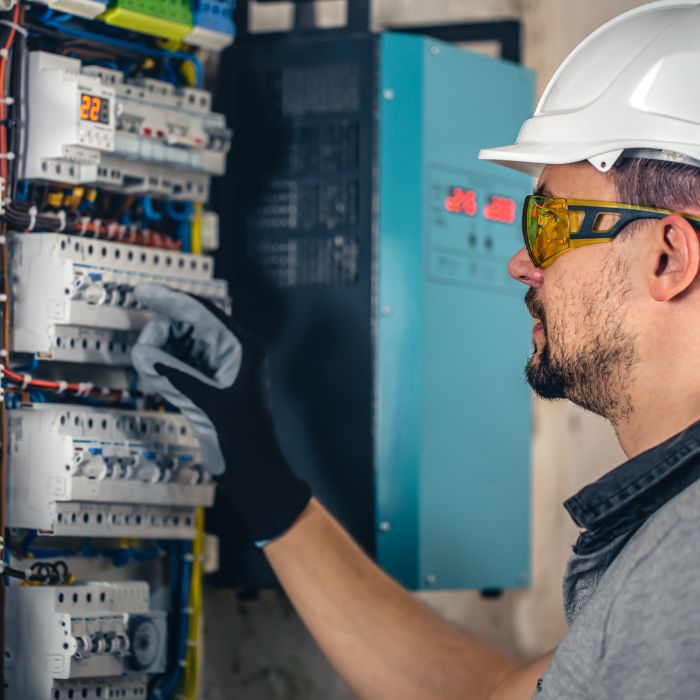
Electrical technicians continue to be in high demand nationwide as infrastructure expands and systems are modernized. Employment in this field is projected to increase by 11% from 2023 to 2033, reflecting strong long-term opportunity.
Typical annual earnings average around $62,350, though pay can vary widely based on experience, certifications, geographic region, and employer. Entry-level roles may start near $39,000, while experienced professionals can earn over $106,000 in higher-paying markets or specialized positions.
Wage and employment data is sourced from the U.S. Bureau of Labor Statistics and updated annually to reflect current labor market conditions.
Key Skills for Success in the Electrical Trade
Electrical professionals must understand essential methods and follow established codes to ensure work is performed safely and correctly.
The ability to evaluate situations efficiently helps electricians manage routine repairs as well as more complex installations.
Electrical work often requires good vision, steady coordination, and physical strength for tasks such as identifying wiring, bending conduit, and pulling cable.
Working effectively with contractors, customers, and crew members is critical to keeping projects organized and on schedule.
Electricians regularly apply math to calculate measurements, determine electrical loads, and ensure systems are installed accurately.